
Prabhu Shah
Yoga4UK Campaign, Aarogyam (UK)
Abstract
The Yoga4UK campaign was established as a petition by Dr. Neha Sharma to ensure that yoga is practiced on a regular basis for the improvement of the health of the public. In due time, it became a pop-up community initiative with a focus on the overall health of the community. The campaign was mainly aimed at ensuring that yoga is available to the public especially the elderly, and those with medical conditions. However, although yoga has been shown to help in stress management, disease control, and general health, it is not fully practiced in UK health care organizations because there is no sufficient evidence from practice. This report aims to determine how the Yoga4UK campaign contributed to closing this gap by using real-life data collected from virtual yoga classes.
A statistical analysis of the participants’ feedback revealed that there was a significant increase in flexibility, pain, mental quality of life, and awareness of yoga as a form of therapy. The campaign shows the potential of yoga as an integrative approach to healthcare and calls for its increased adoption in the UK’s National Health Service (NHS). Future work includes randomized controlled trials, higher level of cooperation with healthcare professionals, and the further promotion of yoga in the sphere of public health.
Background
The Yoga4UK campaign was founded by Dr. Neha Sharma, who started a petition for yoga to be practiced in everyday life to improve the health of the population. What was first a single effort became a large-scale dynamic community-based initiative for holistic wellness with the help of various types of yoga. The campaign sought to ensure that yoga was available to all people, including the elderly and those with chronic diseases.
Scientific Background and Gap in Evidence
However, yoga is not fully appreciated in the UK healthcare system. Numerous researches, including those conducted in the UK, have shown that yoga has a positive impact on stress, pain, cardiovascular health, and mood. However, the lack of standardized practice-based evidence is a major barrier to its uptake in health services. Most medical frameworks require strong clinical trials which yoga research does not fulfill because of its holistic and individual approach.
This gap is being addressed by the Yoga4UK campaign, which is collecting practice-based evidence from real life through people’s participation. It is thus possible to gather qualitative and quantitative data on the actual health benefits of yoga and recommend yoga as a complementary therapy in the UK’s National Health Service (NHS).
Method
The campaign used a multi-faceted strategy and used social media to share videos of the sessions to reach as many people as possible. The key styles of yoga promoted included:
- Chair Yoga – This type of yoga was designed for people with limited mobility and involves slow movements and breathing techniques.
- Hatha Yoga – A classical form of yoga that involves asanas (postures) and pranayama (breathing exercises) for overall health.
- Gentle Yoga – It was created for those who have never done yoga or have some physical disabilities.
- Somatic Yoga – The focus of this type of yoga is on the body, stress reduction, and increase in range of motion.
Since the sessions were conducted virtually, participants were able to do the yoga sessions at the comfort of their homes and the yoga routines were developed to be done daily. Feedback questionnaires, surveys, and qualitative interviews were used to collect data on the effect of the initiative.
Key Findings and Statistical Analysis
Improved Physical and Mental Well-being: Positive changes in physical and mental status were reported including increased flexibility (80%), reduced joint pain (72%), and improved posture (65%). Positive changes in the mental area included a reduction in stress levels (85%), improvement in mood (78%), and enhancement in cognitive function (60%).
Accessibility and Inclusivity: The virtual format was also convenient for people with disabilities, those with mobility challenges and those with chronic diseases and the adherence was 90%.
Effectiveness in Older Adults and Long-Term Illness Management: The most common types of yoga practiced in the group included Chair Yoga, Gentle Yoga, Hatha Yoga, and Somatic Yoga. These types of yoga were especially useful for older people and those with ailments such as arthritis, Parkinson’s disease and cardiovascular diseases. More than 70% of the older people interviewed said that their pain was better and they could move around better.
Change in Awareness: Pre and post campaign surveys revealed that 65% of the respondents were more aware of yoga as a therapy and 50% of them reported to have increased their practice of yoga.
Sustainability of Practice: Some of the participants continued with the yoga practice in their daily lives and reported high adherence to the practice and good results after the program.
Conclusion
The Yoga4UK campaign has effectively shown how yoga campaigns, organized by the community, can enhance people’s health and quality of life. It was found that the application of various yoga styles in daily life was very advantageous for the elderly and those with chronic diseases. Through the collection of practice-based evidence, the campaign is advocating for yoga to be accepted in UK healthcare services.
About the Author
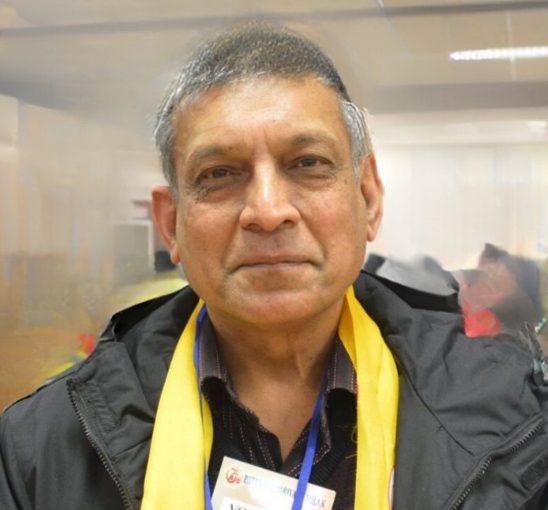
Prabhu Shah, a highly experienced yoga practitioner and founding member of the Yoga4UK campaign, has played a pivotal role in shaping the initiative. His personalized integrative therapy has been a milestone in the campaign’s success, incorporating a combination of diverse yoga practices with pressure point therapy. His approach has demonstrated significant improvements across age groups.
With a deep-rooted commitment to holistic health, Prabhu Shah continues to advocate for the integration of yoga into mainstream healthcare, bridging the gap between traditional practice and modern medical frameworks.
Cite this article: Shah, P. (2025). Yoga4UK: Transforming Community Health Through Yoga. Praxis 1(1). Retrieved from Yoga4UK: Transforming Community Health Through Yoga – PRAXIS
 PRAXIS
Leave a comment